


Tanzania Wildebeest Calving Trip Report – February 2026.
Trip report written by chris hodgson
Whilst I have been guiding for Images of Wildlife since 2019, this was my first time guiding in Ndutu, Tanzania. I immediately fell in love with the area. From lions, leopards, and cheetahs to endless wildebeest herds stretching as far as the eye can see, it’s a photographer’s paradise—and an adventure you’ll never forget. Below is a summary of what the tour entails, and then more specifically, an account of some of the wonderful sightings we experienced.
Images provided in this report are all from our most recent tour in February 2026 and are a mixture of those captured by myself and my co-guide, Sarah Skinner.
Introduction – Tanzania Wildebeest Calving & Big Cat Photo Tour
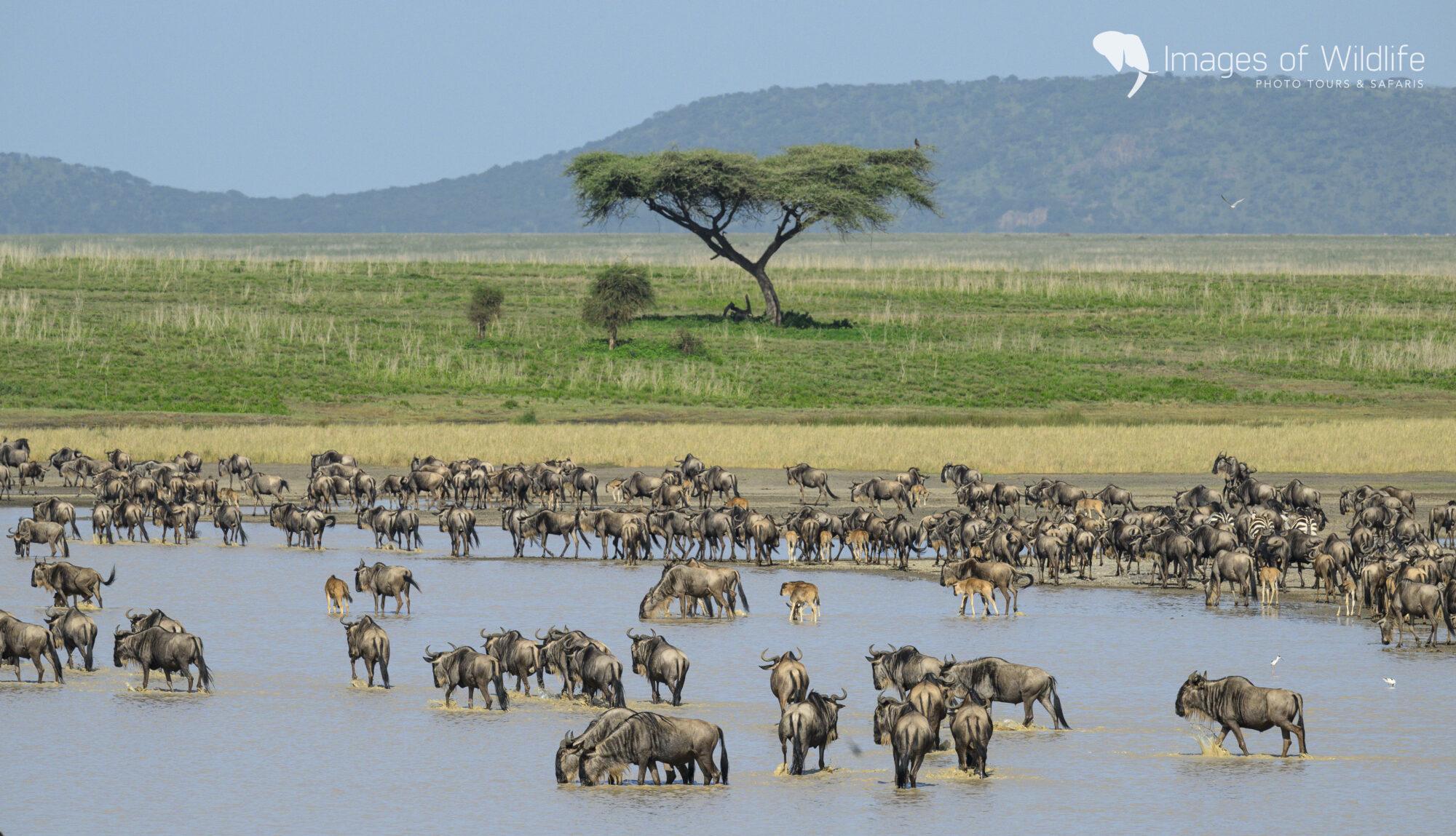
Images of Wildlife has a vast experience of leading tours to Ndutu since 2018. We always time our tours in early/mid-February as it is the mid-point of the Wildebeest calving season. This maximises our chances of timing our visit with the huge herds of wildebeest still present. Our Tanzania Wildebeest Calving Tour takes you to two of the most spectacular wildlife regions in Tanzania. The first stop is Ndutu, in the heart of the Ngorongoro Conservation Area. From January to March, the plains come alive as around 1.5 million wildebeest gather to calve.
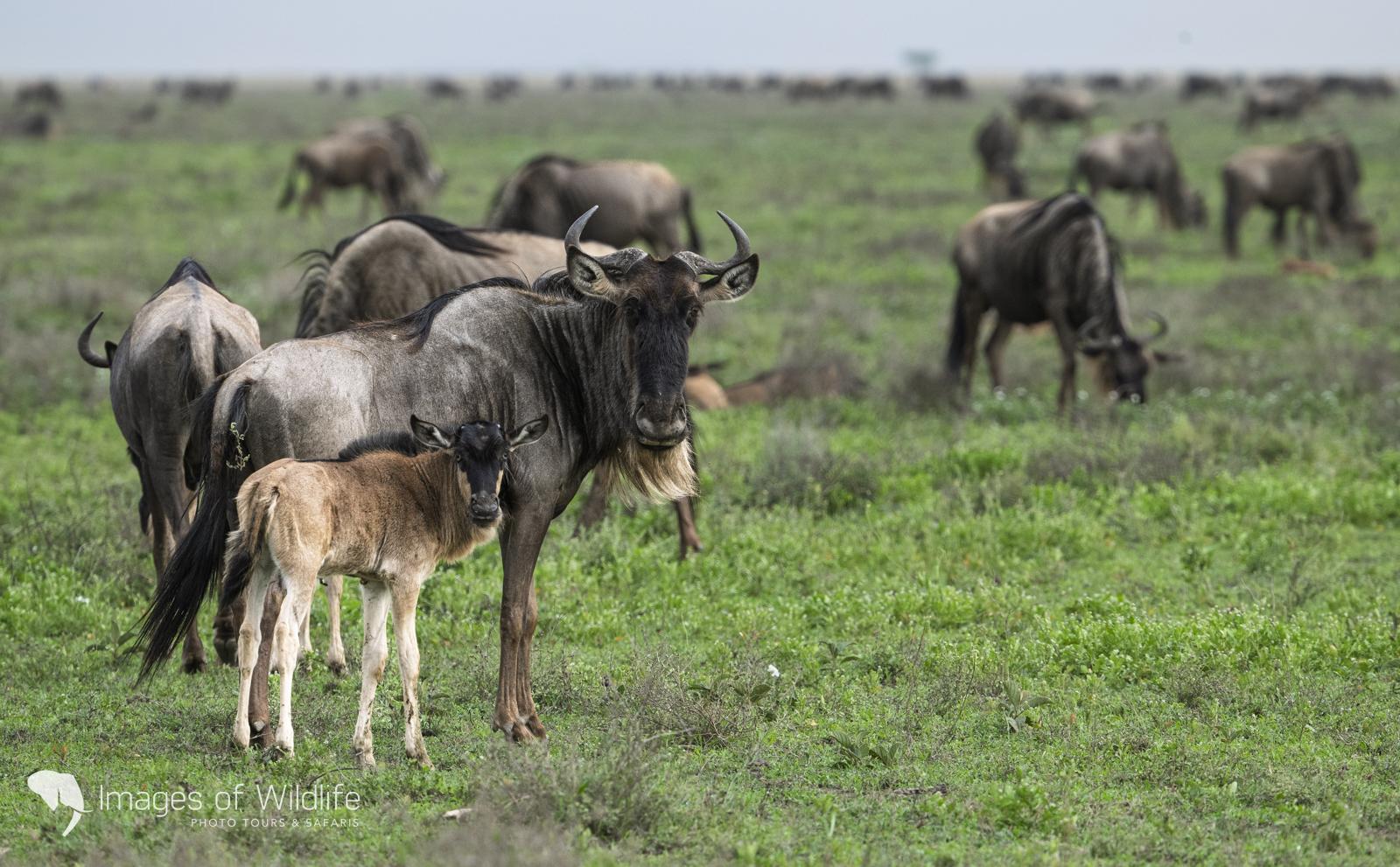
Their occupancy in this region is part of the great migration—one of nature’s most extraordinary events. The wildebeest journey some 2,000 km across the Serengeti-Mara ecosystem in search of grazing and water, joined by hundreds of thousands of zebras and gazelles. Witnessing it all is a breathtaking sensory experience—the sights, the sounds, even the smells—an unforgettable spectacle for photographers and wildlife lovers alike. Seeing a herd of over 100,000 animals moving across the plains is enough to bring tears to even the most seasoned photographer’s eyes.
Ndutu is the perfect place for calving. The volcanic soil provides short, nutrient-rich grasses, and the open plains give the herds natural protection from predators. At the height of calving, up to 8,000 calves are born each day, overwhelming the predators and making it an astonishing display of survival and abundance.
We spend five nights at our mobile tented camp in Ndutu, followed by three nights at a luxury permanent tented camp in the Eastern Serengeti. The weather this time of year is very comfortable, with daytime temperatures reaching around 30°C, and evenings rarely dropping below double digits. Light rain can still occur, so along with sunscreen, a waterproof jacket is a smart idea.
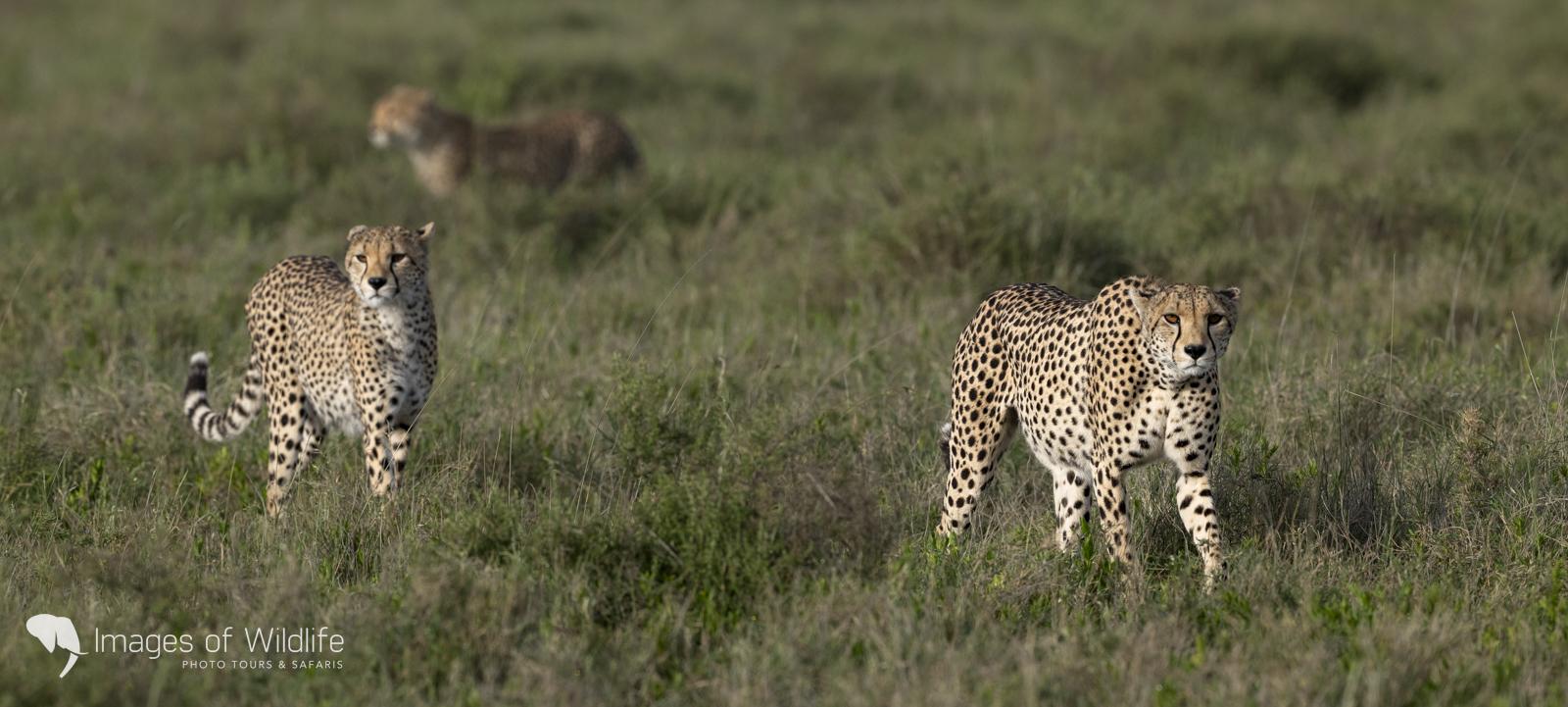
For the final three nights, we base ourselves near Gol Kopjes, with special permits to enter and game drive around this area. Famous for its granite monoliths scattered across the open plains like desert oases. These iconic rocks provide shelter and warmth to countless species—but our main goal here is spotting big cats. Lions, leopards, and cheetahs often use the kopjes to cool off or bask in the sun, creating incredible photographic opportunities. In addition to this area being a prime cheetah breeding and conservation area and an area favoured by the local lion prides to safely den their cubs.
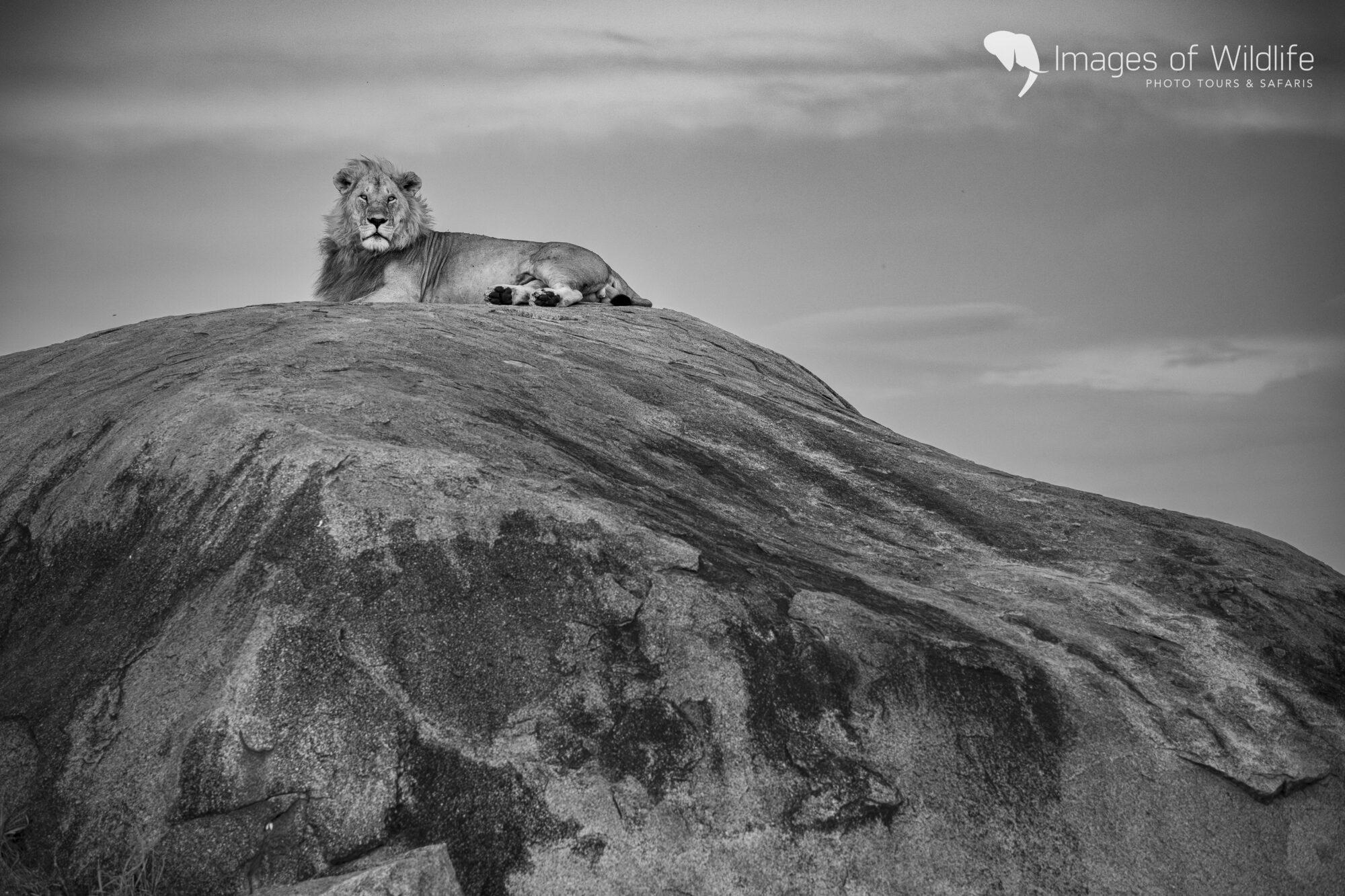
The combination of Ndutu and Gol Kopjes makes for a trip full of variety. You can capture predators up close, slow-pan massive wildebeest herds, or shoot wide environmental portraits of cats perched on rocks. By the end of the trip, everyone returns home with thousands of stunning images.

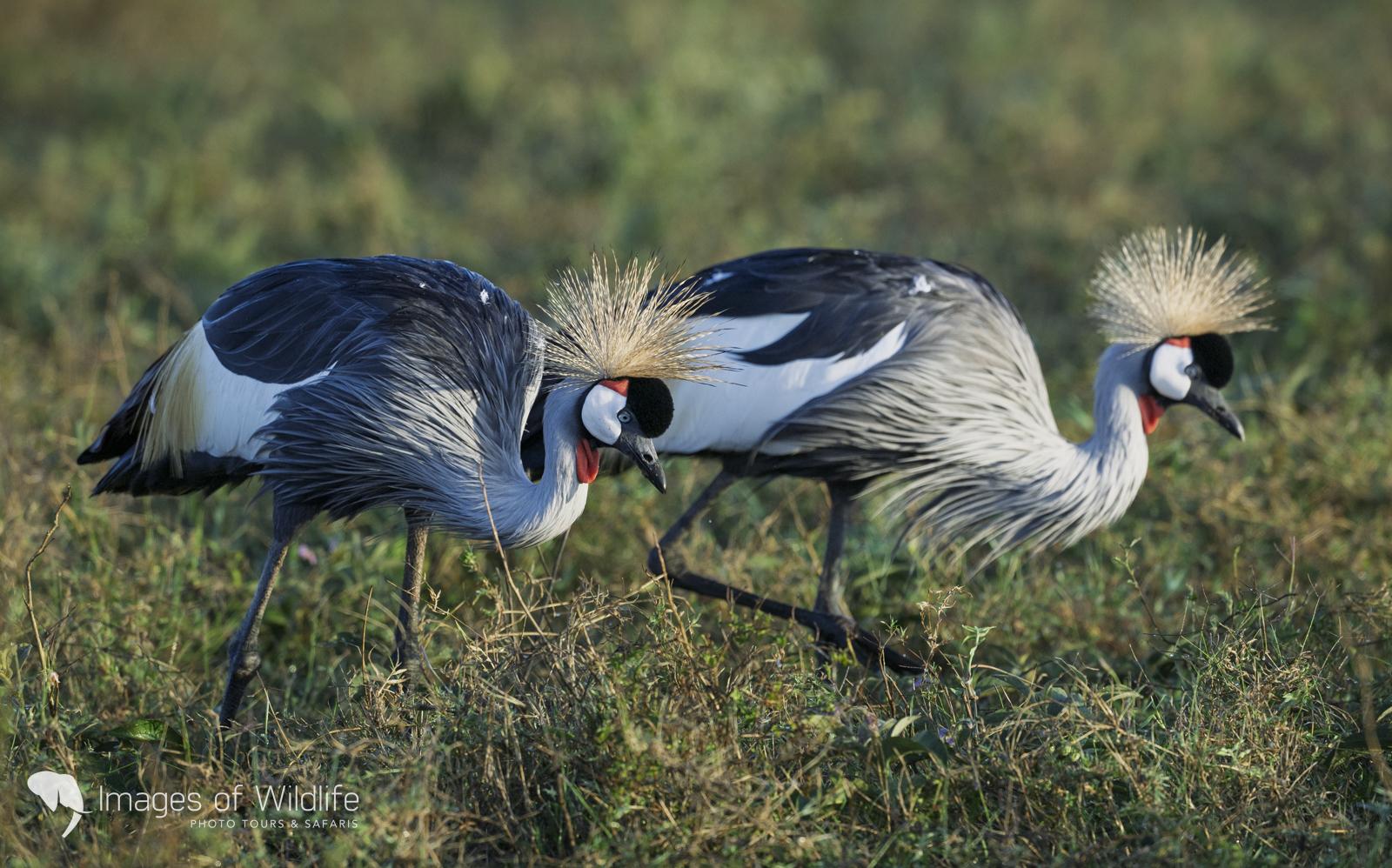
Birdlife adds another layer of excitement. Colourful rollers, African ground hornbills, grey crowned cranes, and busy bee-eaters kept our cameras clicking. Raptors soar overhead, and while this is not a dedicated birding trip, sightings often included over 90 species, with the region supporting around 300.
Sightings reports – February 2026 – Wildebeest Calving & Big Cat Photo Tour
Incredible wildlife encounters were certainly abundant on this tour. There were so many sightings during February 2026 that provided unbelievable photographic moments and too many to list one by one. However, below is a summary in pictorial form of some of these wonderful experiences, plus a mention of one particular incredible lion in water sighting.
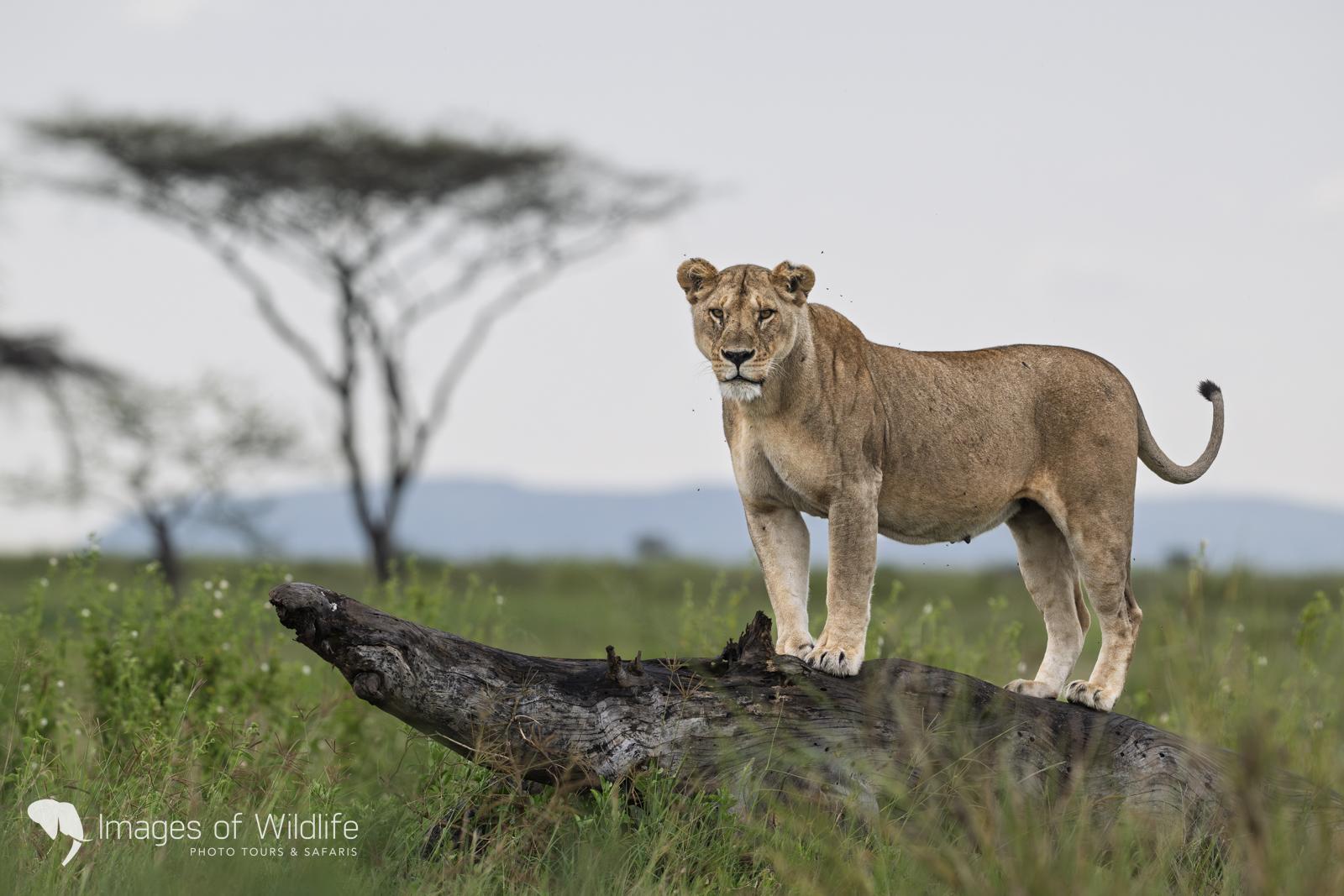
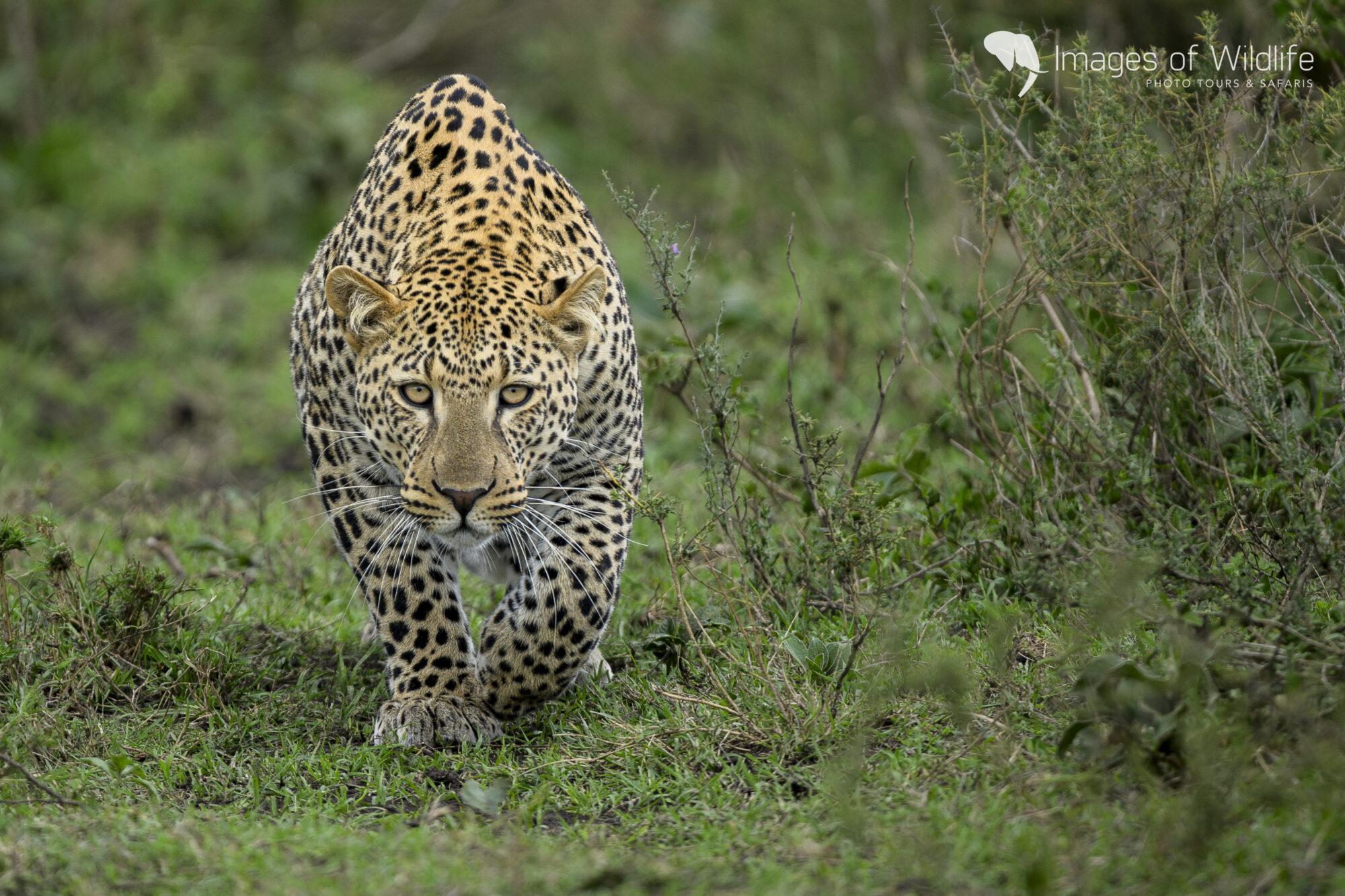
During our tour we focused on time on three main lion prides (however, we saw members of at least 5 different lion prides), spotted and photographed several cheetahs, including coalitions of male cheetah and cheetah families. Experienced 2-3 incredible sightings of a confident male leopard (probably one of the boldest leopards I have ever seen), saw servals, and, of course, the vast wildebeest herds. This trip truly is a wildlife photographer’s dream.

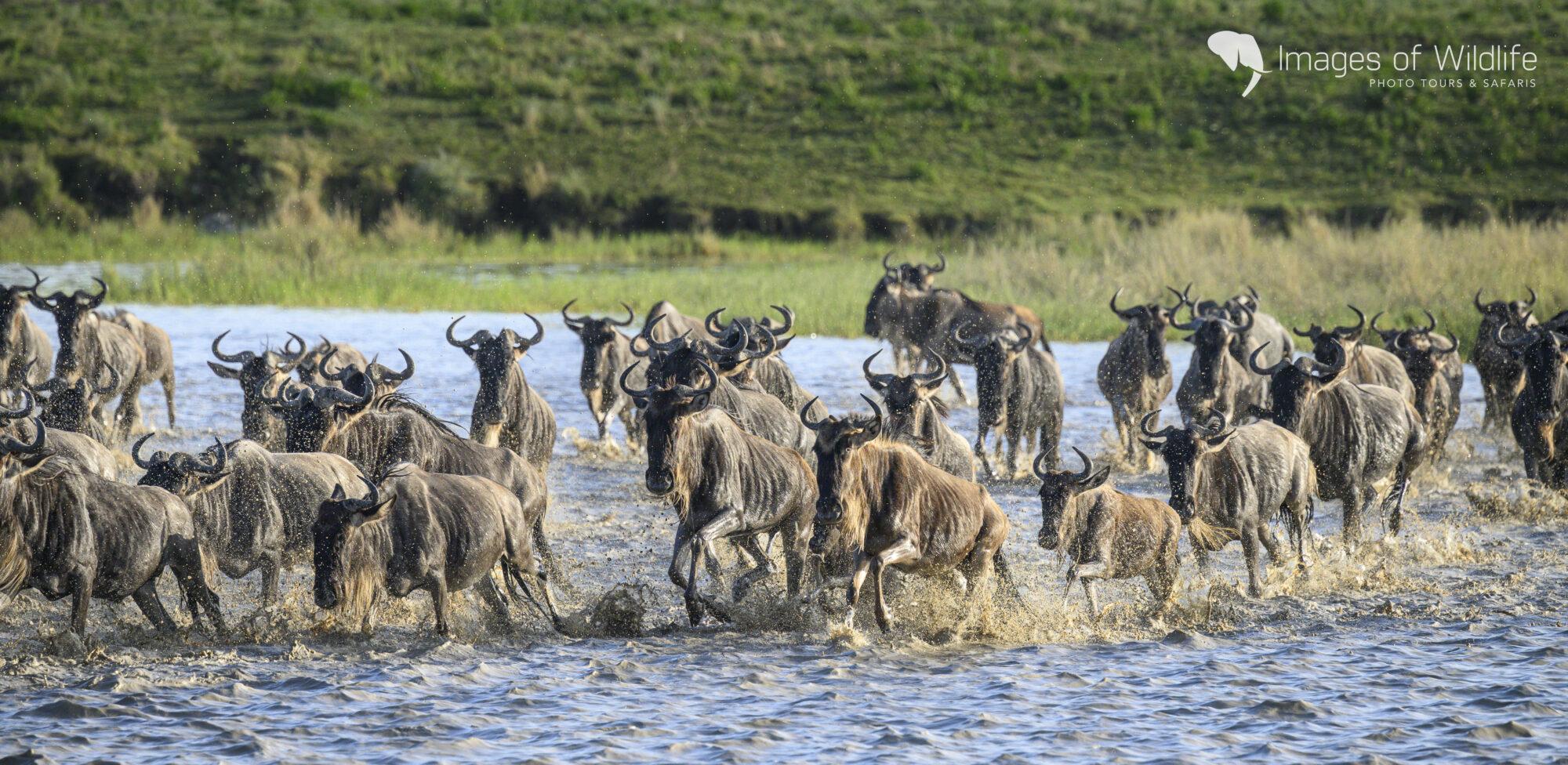
For me, the highlight was being immersed in the herds of wildebeest and their newborn calves. We watched two enormous herds, around 100,000 animals, cross a local pan for over two hours. It felt like a Mara River crossing—without the crocodiles! The movement, splashing water, and endless action offered endless photographic possibilities, from high-speed action shots, high-key opportunities, and slow panning. And where there are herds, the predators are never far behind!
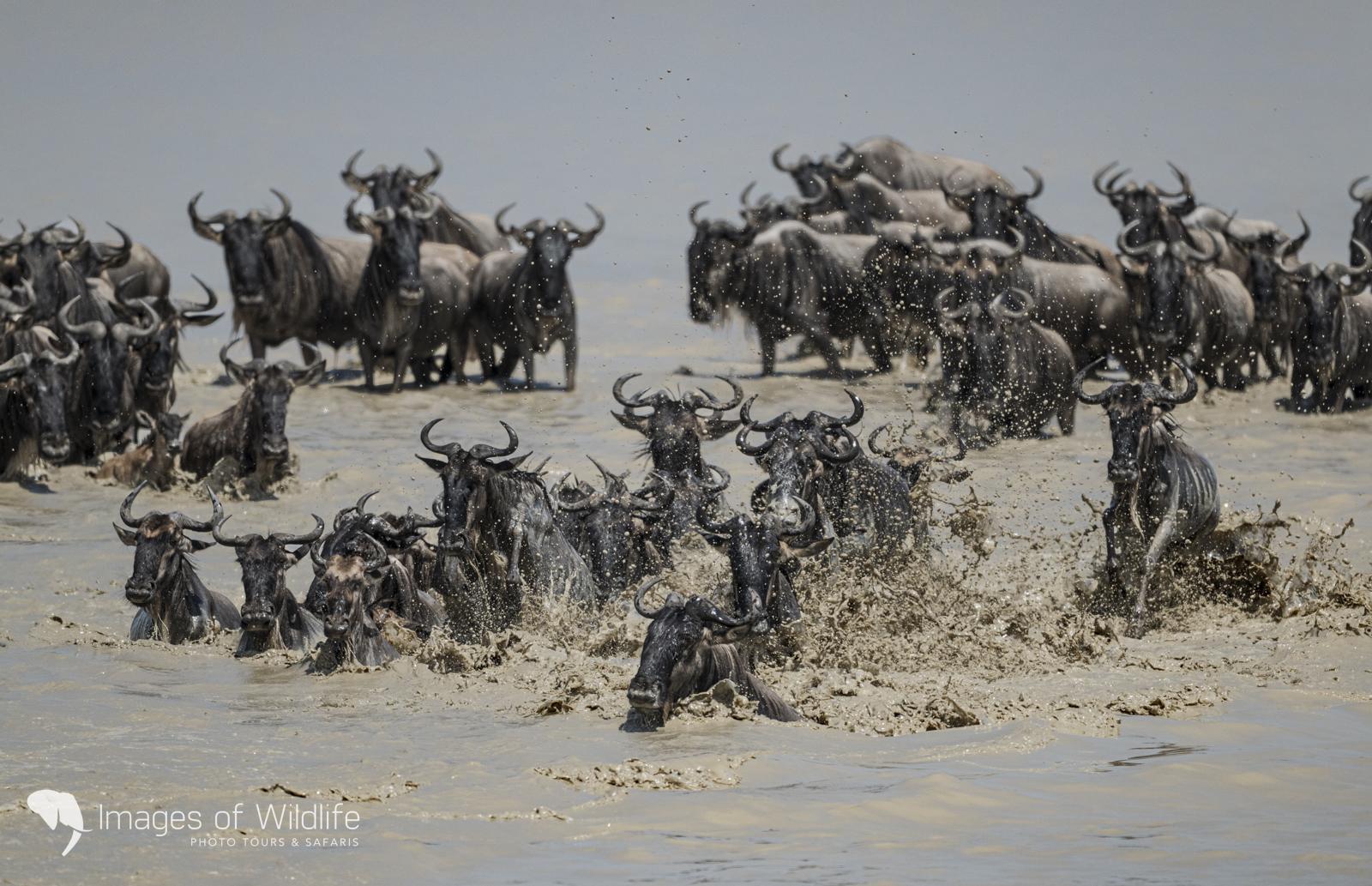
We were treated to several incredible big cat sightings during the trip, but one moment will remain a highlight for our guests—and for us as guides. In fact, we never had a cat-free drive throughout the whole trip!

We encountered the Hidden Valley Pride (Ndutu) near a local waterhole. The waterhole was large, stretching roughly 200 m by 50 m, with an adult male, three lionesses, and around five sub-adults. After playing in the grass, they headed toward the shoreline. The male quickly disappeared into reeds, while the lionesses settled along the edge.

We repositioned our vehicle, sensing they might approach the water. Sure enough, one sub-adult lioness walked into the middle of the lake—an astonishing sight, as lions usually avoid water. She waded slowly, paused for a drink, and even appeared to stalk catfish.
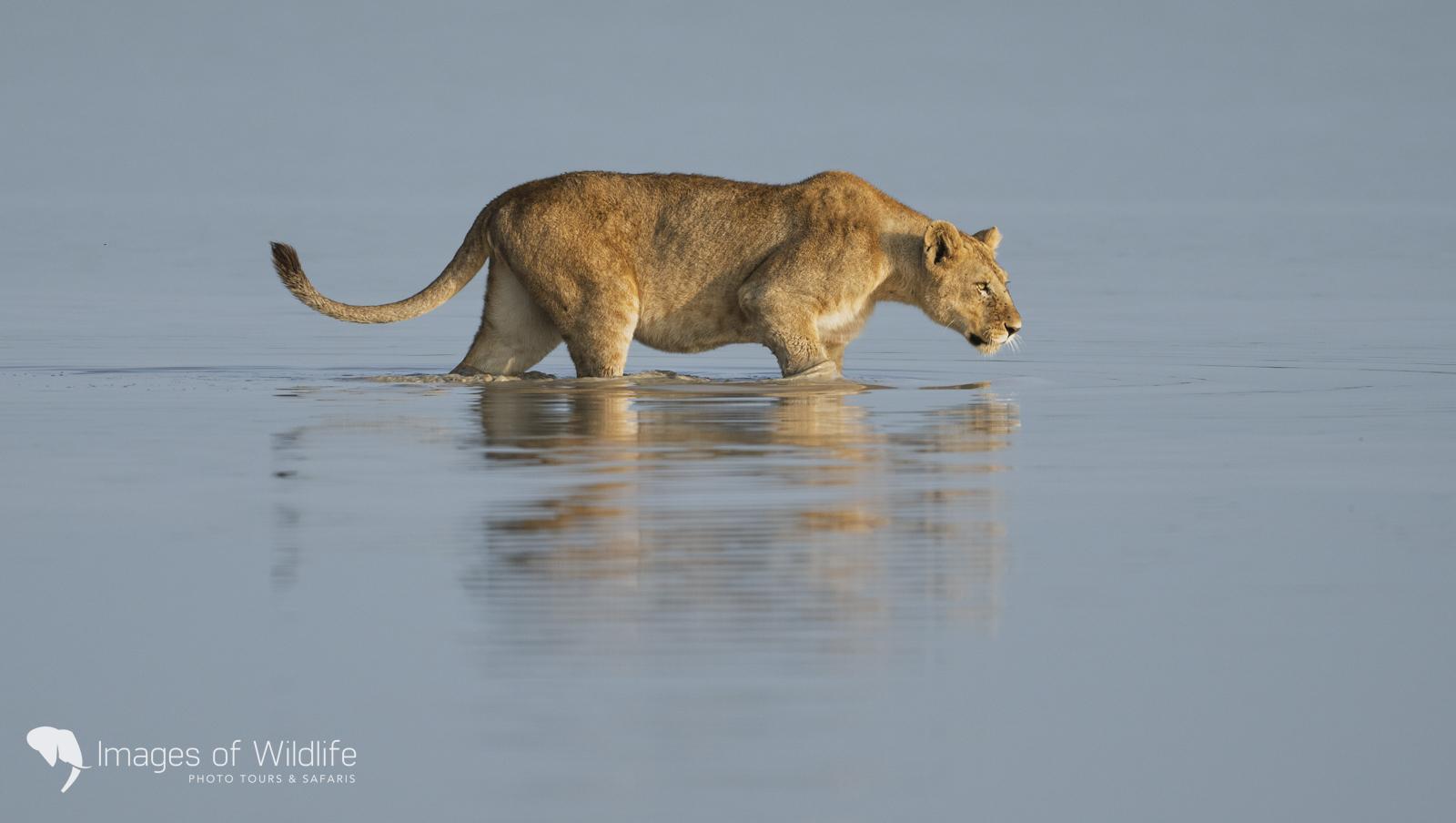
Moments later, she crossed the lake, moving deliberately while the others hesitated. Then the pride followed, one by one, including the sub-adults, who soon began playing and leaping in the water. It was an incredible, intimate scene—our two game vehicles had the sighting all to ourselves.

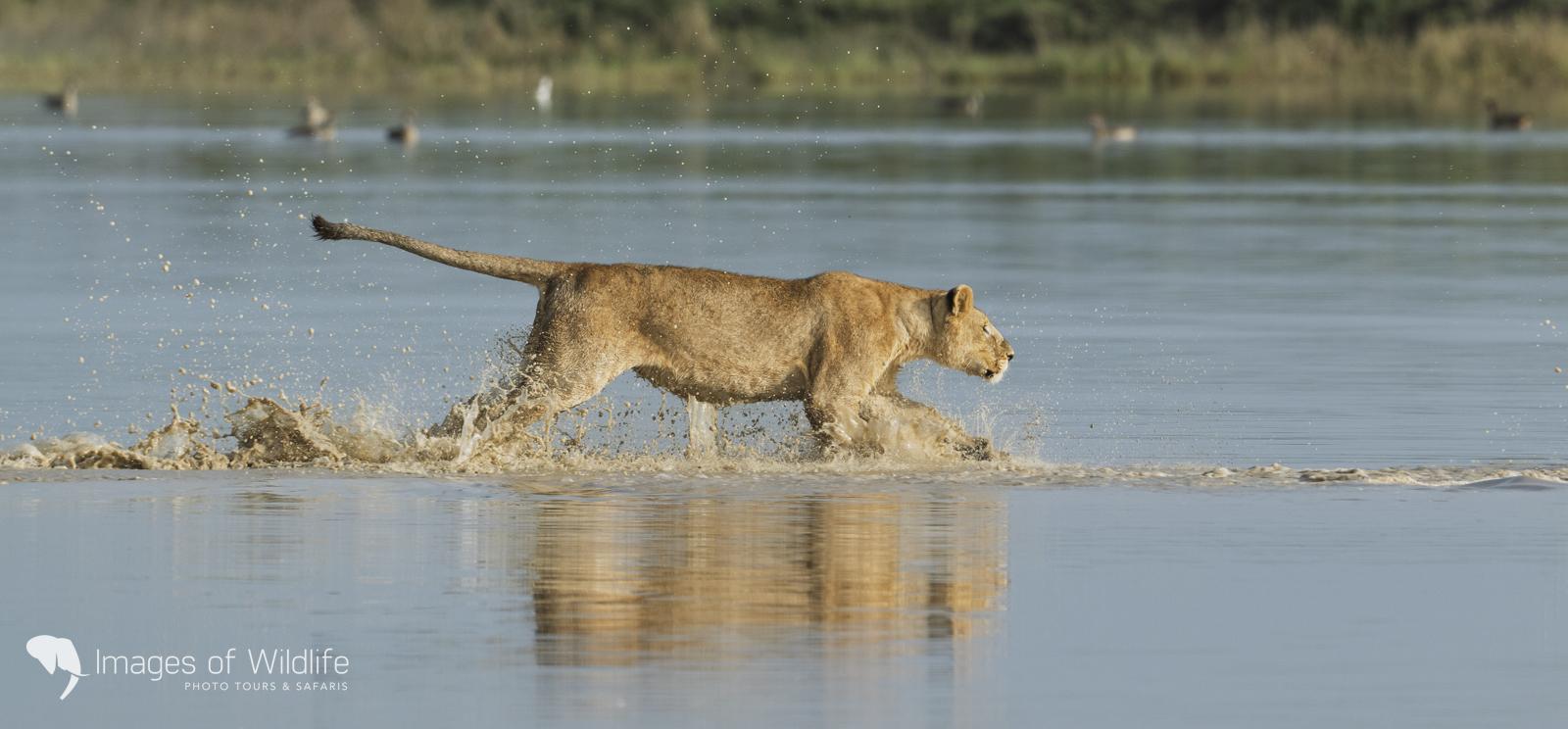
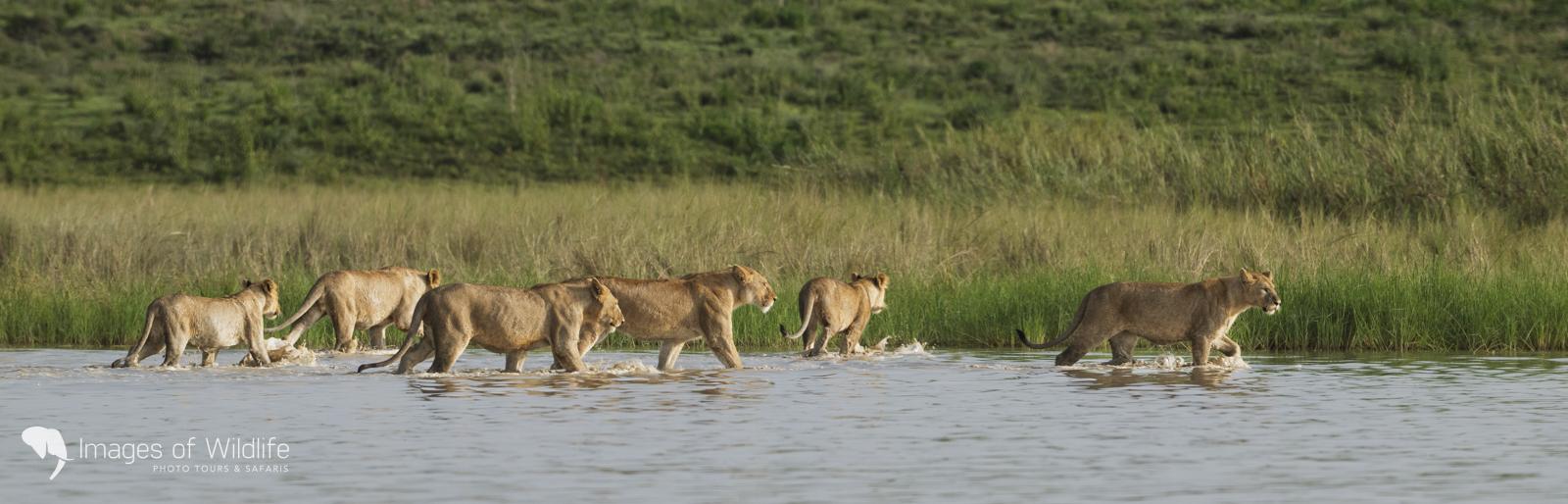
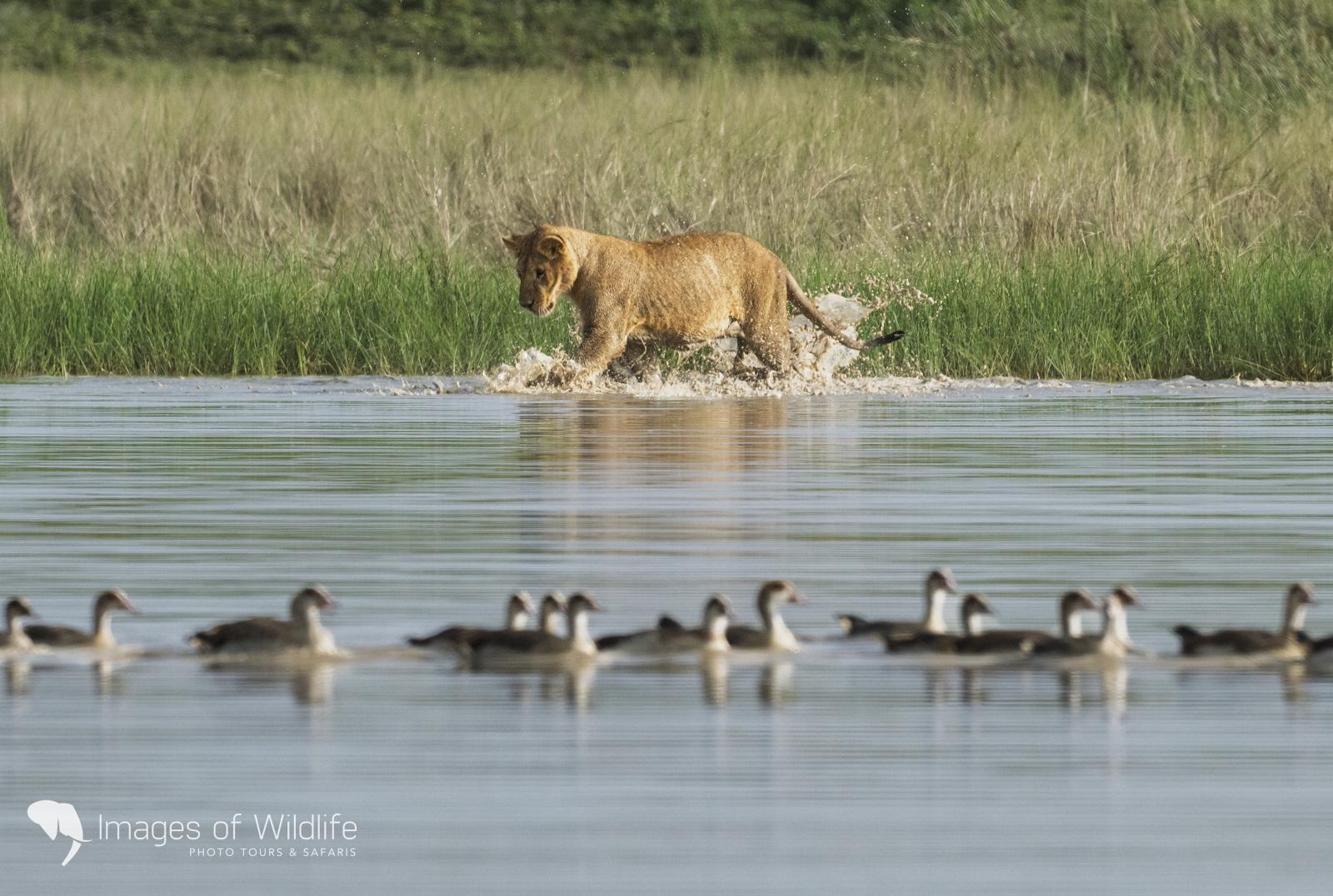
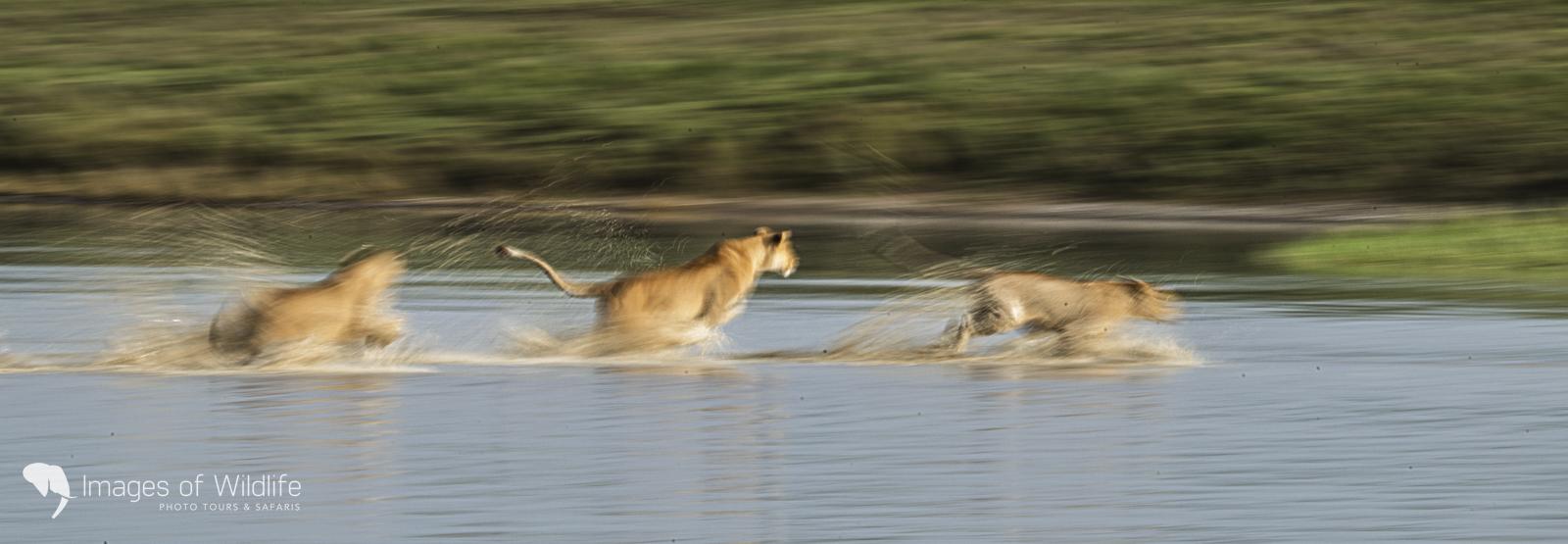
Moments like this perfectly capture the magic of the Tanzania Wildebeest Calving Tour: vast herds, stunning predators, and unique, once-in-a-lifetime wildlife behaviour.
The trip runs again in 2027, and we still have spaces available. If you’d like to join us, contact us via social media or at info@imagesofwildlife.co.uk to secure your spot.
Summary of Key Predator Sightings:

Lions
- Marsh pride lions: 5 lionesses and subs + 2 males + 3 6month old cubs (5 separate sightings)
- Hidden Valley Pride Lions – 4 pride males, approx. 5 lionesses plus 9 sub adults (3 x separate sightings)
- Lioness with 3 tiny young cubs
- 2 lone male lions
- Honeymooning lions
- 2 males and 3 lionesses on a kopje (2x separate sightings)
- 2 x lioness with 3 x 2-month-old cubs
- 4 x lionesses hunting

Leopards
- Male leopard (3 x separate sightings, two of these with the leopard for over 2 hours and active in this time)
- Leopard in a tree
- 2 x leopards in a tree
Cheetahs
- Female cheetah with 4 very young cubs + Female alone hunting (2x sightings)
- Female cheetah with 2 sub-adult cubs (2x sightings)
- Lone male cheetah attempting to hunt
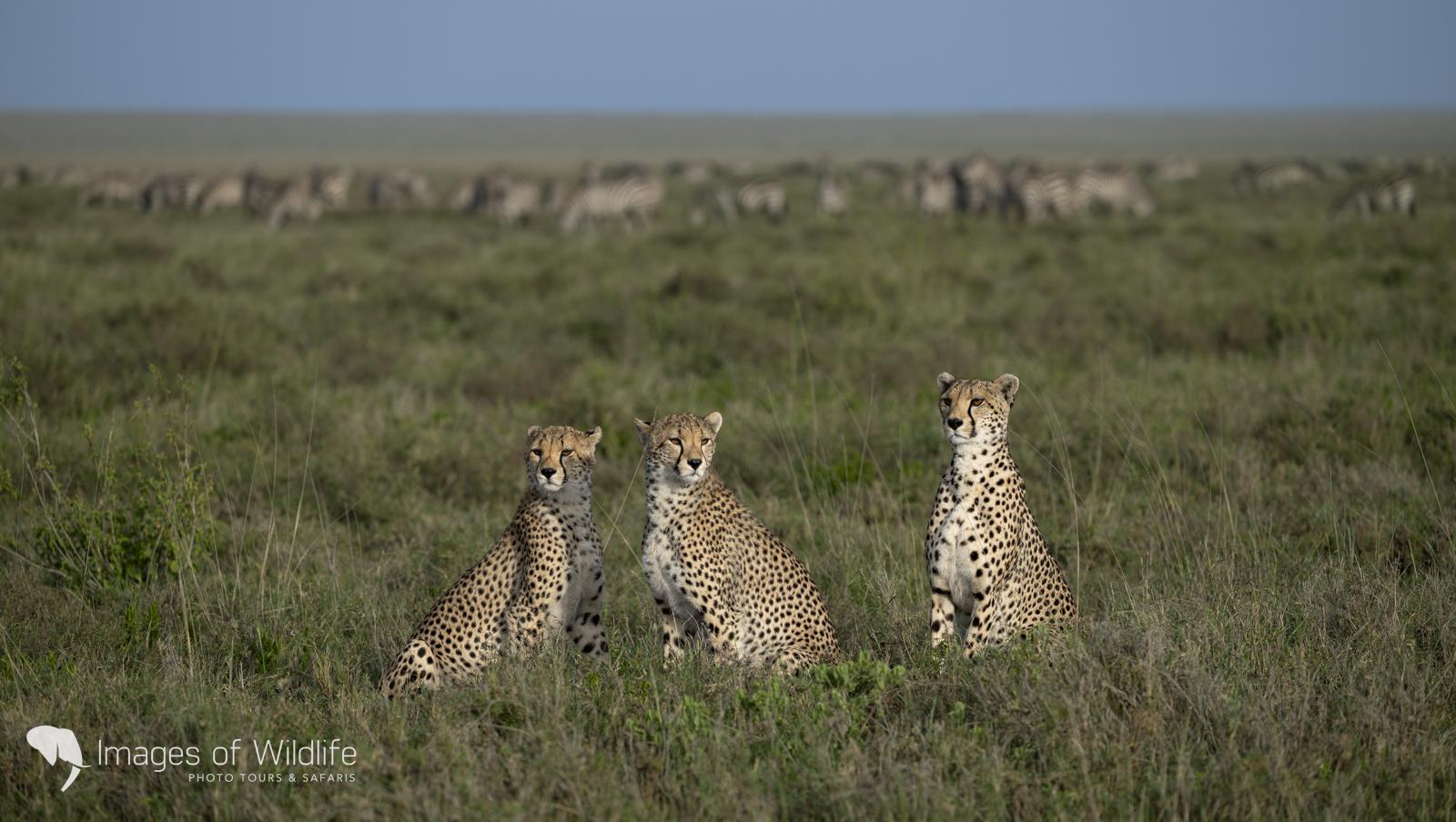
- 3 male cheetah coalition (2x sightings)
- Female cheetah with 2 approx. 13-15-month-old cubs
- Senior female cheetah
Other Predator Sightings:
| Serval – several sightings | Black-backed jackal |
| Golden jackal | Spotted hyena |
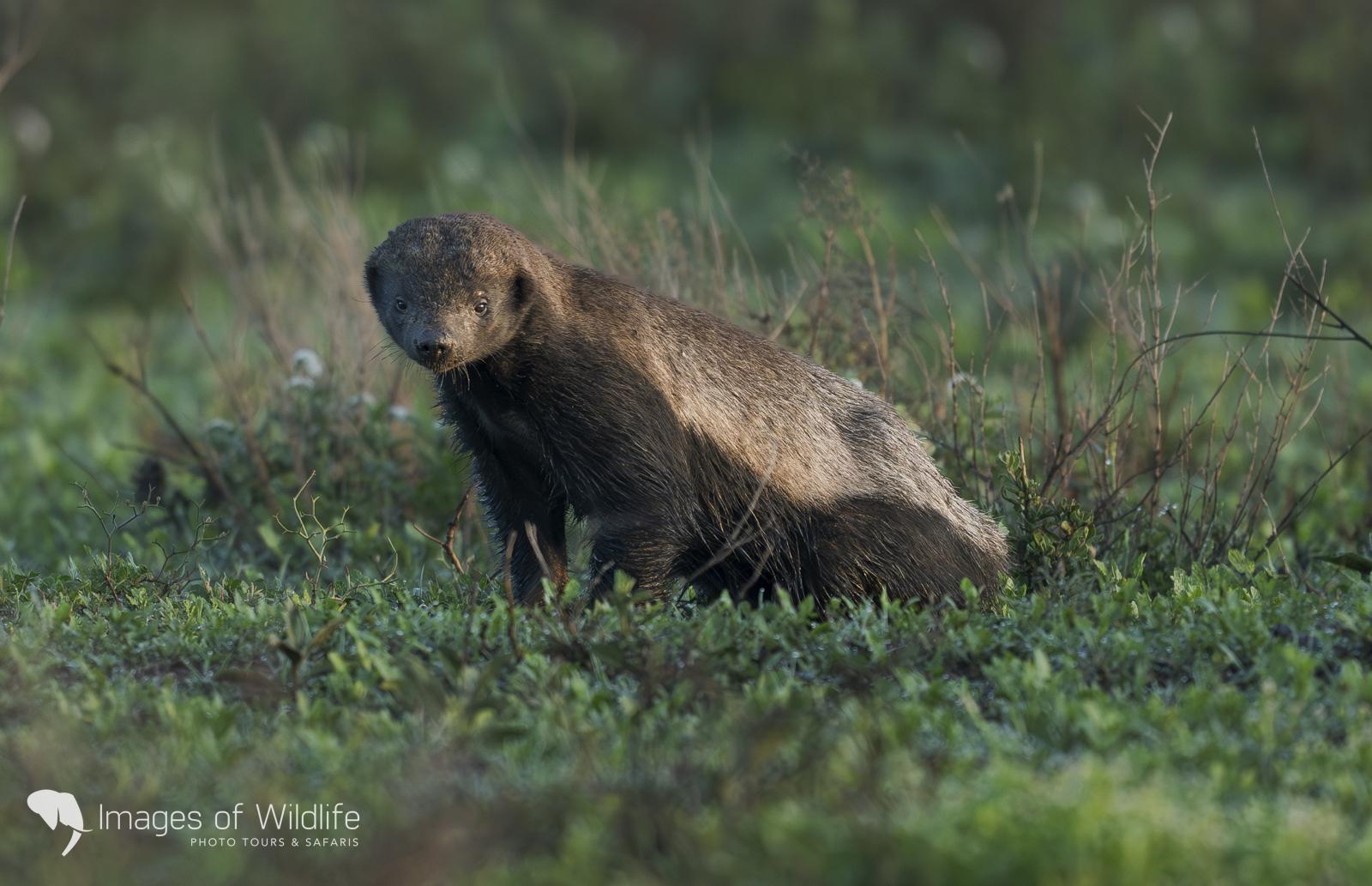
| Bat-eared fox | Honey badger |
Plains & General Game Sightings:
| Elephant | Giraffe |
| Buffalo | Hippopotamus |
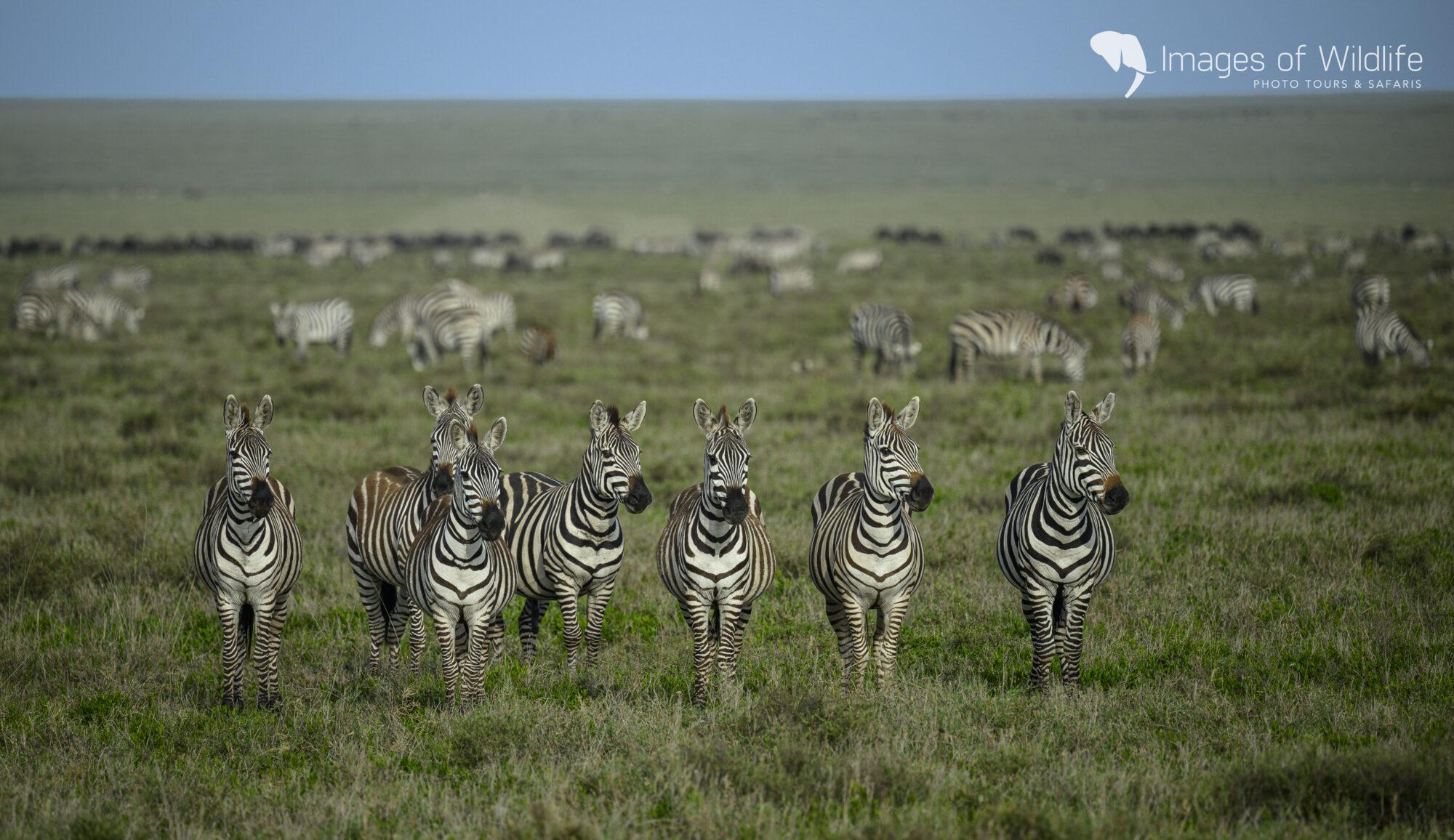
| Wildebeest | Zebra |
| Eland | Impala |
| Topi | Hartebeest |
| Grant’s gazelle | Thomson’s gazelle |
| Reedbuck | Steenbok |
| Dik Dik | Warthog |
Other Sightings:
| Slender mongoose | Banded mongoose |
| Dwarf mongoose | Marsh terrapin |
| Cape hare | Scrub hare |
| Dung beetles | Baboon spider |
| Rock hyrax | Agama lizard |
| Afrixan rock python | Vervet monkeys |

Bird Sightings
| Abdim’s Stork
African Grey Hornbill African Hoopoe African White-backed Vulture Augur Buzzard Bateleur Black Bishop Black Coucal Black-and-white Cuckoo Black-bellied Bustard Black-chested Snake-Eagle Black-headed Heron Black-shouldered Kite Black-winged Stilt Blacksmith Lapwing Brown Babbler Cape Rook Capped Wheatear Cardinal Woodpecker Cattle Egret Common Cuckoo Common Kestrel Common Ostrich Common Sandpiper Coqui Francolin Croaking Cisticola Crowned Lapwing Dark Chanting-Goshawk Diederik Cuckoo Eastern Chanting-Goshawk |
Egyptian Goose
European Roller Fork-tailed Drongo Grassland Pipit Great Spotted Cuckoo Greater Flamingo Grey Crowned Crane Grey Heron Gull-billed Tern Hamerkop Helmeted Guineafowl Hooded Vulture Kori Bustard Lappet-faced Vulture Lesser Flamingo Lilac-breasted Roller Little Bee-eater Little Egret Little Ringed Plover Lizard Buzzard Long-crested Eagle Magpie Shrike Marabou Stork Marsh Owl Montagu’s Harrier Namaqua Dove Northern White-crowned Shrike Ovambo Sparrowhawk Pied Avocet Pin-tailed Whydah |
Pangani Longclaw
Red-chested Cuckoo Red-necked Spurfowl Ring-necked Dove Ruff Rufous-rumped Lark Rüppell’s Griffon Vulture Saddle-billed Stork Scarlet-chested Sunbird Secretary Bird Silverbird Southern Ground-hornbill Spotted Thick-knee Superb Starling Tawny Eagle Tawny Eagle Two-banded Courser Usambiro Barbet Verreaux’s Eagle-Owl Water Thick-knee Wattled Starling White Stork White-bellied Bustard White-browed Coucal White-headed Buffalo-Weaver Yellow-billed Oxpecker Yellow-crowned Canary Yellow-fronted Canary Yellow-throated Sandgrouse |